

Susanna Freymark
Four years ago, on this day, February 28, a deluge of rain fell across our region. It was unlike anything we’d witnessed before.
It stayed for days, becoming a flood of biblical proportions.
Four years on, after cleaning mud out of homes, and rebuilding their lives — the 2022 flood is a defining moment in the history of the Northern Rivers community.
For better or worse it has come to represent the best and worst in us, in the governments of the day and in the way we live our lives — how we adapt, how we heal.
The floodwaters may have receded but the sorrow, trauma and frustration sits in so many conversations IndyNR.com has had with residents about their recovery.
In Woodburn, in the darkness of night, the floodwaters rose higher and higher, it was fast-flowing and forced people out of their homes. In that town and many others, locals jumped into boats to help their communities.
We made a film about these Tinnie Heroes. You can watch it for free on YouTube.
On Sunday, March 1, at 4pm The Black Cockatoos will launch their single After the Floods at the Broadwater Hotel.
We are still talking and singing about the flood disaster — many are still processing what happened.
The Film Floodland with a focus on the recovery in Lismore is showing in cinemas. Watch the trailer here.
Since the disaster, there have been many changes in flood authorities and in the ways state and federal governments have supported (or not) the communities impacted.
The Resilient Measures Program closes on March 31. There will be a pop up information event at Woodburn on Wednesday, March 18 at 4pm—7pm at 114 River Street.
This is where residents can apply for financial aid to make their homes more flood resilient.
In the polymorphic flood authority, its slow response has faced criticism from locals. Have the buybacks divided towns and villages rather than save them?
Here are some numbers from the NSW Reconstruction Authority:
- 954 buyback offers approved across seven LGAs in the Northern Rivers
- 866 have accepted. (The RA is still processing final applications since the application close date on 31 December 2025. )
- There have been 55 buyback houses in Richmond Valley
- 10 buybacks in Kyogle.
- To date 43 resilient measures grants have been approved in the Richmond Valley and three in Kyogle.
Minister for Recovery and State MP Janelle Saffin sent a video which is summarised below:
Today marks four years since the 2022 floods — that inland tsunami none of us were prepared for.
It was our trigger moment. Life before 2022, and life after.
Change we didn’t ask for, but change that forced its way through our front doors, our back screen doors, and up through the floorboards into our lives.
Like so many, my family felt it deeply. We lost our dog. My husband nearly drowned.
And he never really recovered — just as some people here are still struggling.
But as your local Member, I didn’t just see that struggle —I lived it with you. That lived experience became my fuel. It’s why I’ve been so determined to look at what worked and what didn’t, ensuring we never repeat the mistakes of the past.
Since our last anniversary, I’ve been appointed Minister for Recovery. It’s a shift from advocating as local member to advocating statewide.
I’m taking the lessons we learned the hard way in the Northern Rivers and putting them at the heart of how this state handles disasters. I’m here to make it count.
My job is to strengthen the NSW Reconstruction Authority. It’s a young agency, but it’s growing up fast to be recovery ready and response ready.
Efficient, competent and compassionate, even when the conversation is difficult.
And we’ll continue the serious conversations about longterm mitigation and adaptation.
Here in the Northern Rivers, we are trailblazers. What we have done and will do becomes the blueprint for how the rest of the country faces extreme disasters.
We know the pain of 2022. But we also know something more powerful: that we can rise, rebuild and reshape our future.
We have come a long way and got a way to go. But we are now turning the corner on recovery, so many good things are happening to secure our future.
I’m committed to that safe and secure future. And I know — because I’ve seen it — that this community has the courage, the love and the heart to shape it with me.
Statement from the Reconstruction Authority
The NSW Reconstruction Authority has outlined a decisive year of delivery in the Northern Rivers —accelerating home buybacks and retrofits, critical infrastructure repairs and long-term flood mitigation planning to keep communities safer.
In the four years since the 2022 floods, the NSW Government alone has committed more than $1.3billion in regional recovery, including small business recovery grants and support packages, demolition programs, the Resilient Homes Program, and the Resilient Lands Program. 
Under the Essential Public Asset Restoration – Build Back Better program, more than $1.5 billion has been committed to Northern Rivers councils by the NSW and Federal governments under the Disaster Recovery Funding Arrangements. So far, $537 million has gone towards more than 2500 infrastructure projects across local and state networks. This is restoring roads, bridges, community facilities, repairing landslips and essential services at scale.
The NSW Reconstruction Authority also has bought back more than 779 homes under DRFA funding, with an additional 119 approved offers working through to settlement, relocating families from the highest risk flood areas in the Northern Rivers. These homes are set to be removed from the floodplain by the end of the year, ensuring communities can plan for their renewal of these vacated areas, the largest national program of its kind.
The RA has also completed 848 Resilient Measures home assessments across the Northern Rivers under the Resilient Homes Program. Out of this, 253 grants have been approved, and 111 homeowners are in the process of scoping and seeking quotes for works.
The first sales of safer land, enabling relocation of flood buyback homes and new housing, will begin in coming months at Mount Pleasant in Goonellabah. Further sales are expected to begin in East Lismore and North Lismore by the middle of the year.
Through the Northern Rivers Recovery and Resilience Program, the Reconstruction Authority is advancing the region’s flood mitigation blueprint—36 projects in total including major flood pump station upgrades, town drainage, raising bridges and roads, and widening flood channels across the region. Twenty-two projects have been completed and 15 are in the delivery phase for 2026–2027.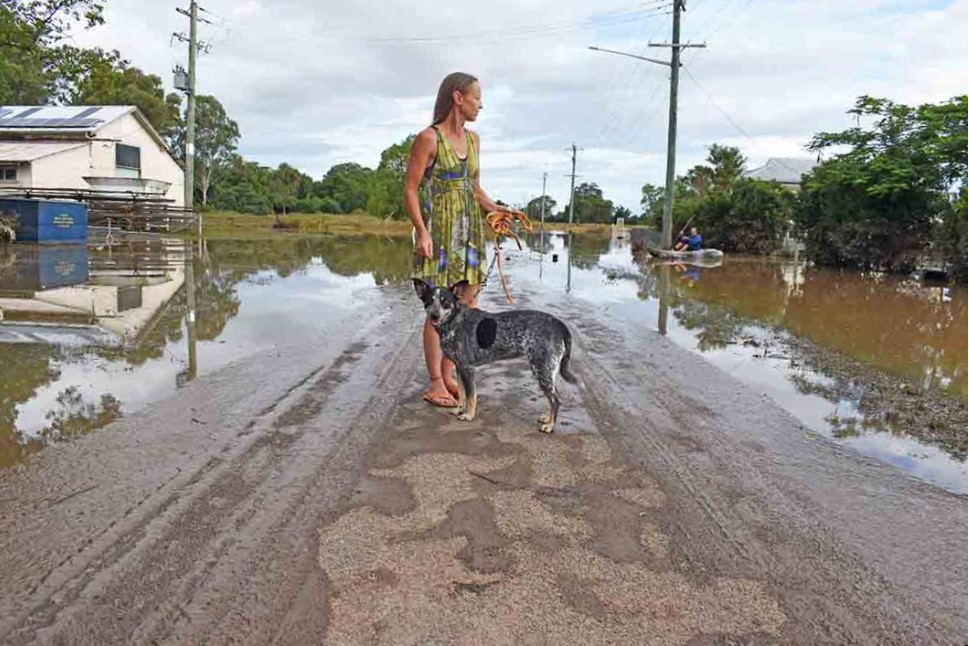
The Authority is leading the region’s first multi-hazard Disaster Adaptation Plan. Risk mapping is underway, a 40-member Community Reference Group is guiding development, and adaptation options will be shared in 2026, which will be informed by the upcoming CSIRO final report into flood mitigation for the Richmond River catchment.
Statement from Federal MP Kevin Hogan:
Important questions we need to ask. How many metres have been taken off the next flood? Do businesses in the CBD and industrial estates feel safer? Do people have confidence to invest in our region? How much flood free land has been made available?
State and Federal Governments promised new land and new housing. The Resilient Lands Program was established to unlock land, yet not one home has been built. Some examples:
The Crawford Road site in East Lismore will have no new residents for up to two more years.
The North Lismore site will not have relocation homes for up to two more years.
The Mount Pleasant Estate development in Goonellabah continues to be delayed.
It will be close to six years after the disaster before a single home is delivered. The Reconstruction Authority was established to speed up this process. If this is considered a quick process, then something is clearly wrong.
The buyback scheme has also failed. It’s moved half a street and left the other half there. How does that make the community any safer.
Flood mitigation is the only strategy that will deliver long-term safety and certainty for our region. Yet to date there has been no meaningful engineering work done to reduce the level of the next flood.
Recovery has been driven overwhelmingly by local families, farmers and businesses who have poured their savings into rebuilding homes, reopening shops, restoring farms and getting people back to work.
We await the CSIRO Flood Mitigation Report in June. Governments must commit to funding and delivering recommendations to take 2 metres off the next flood.