
Susanna Freymark
Phil Martin has lodged his submission about the council’s proposal to dig up the bitumen on Boundary Creek Road and reclassify it as an unsealed road.
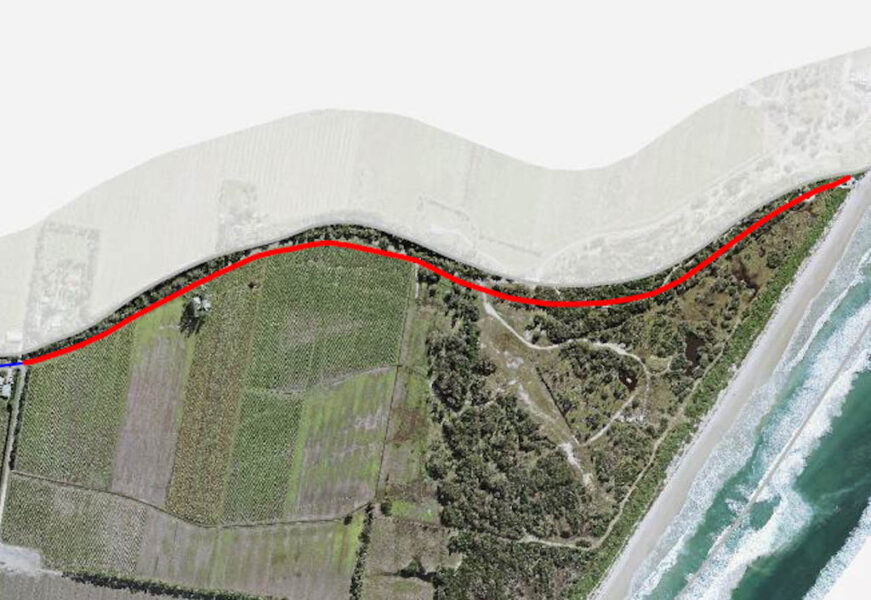
The 1.5km of Boundary Creek Road leads to the beach and Mr Martin said there are 10 houses that use the road regularly.
“The last 500m of bitumen was torn up three years ago,” Mr Martin said.
He doesn’t want to see the rest of the bitumen road go.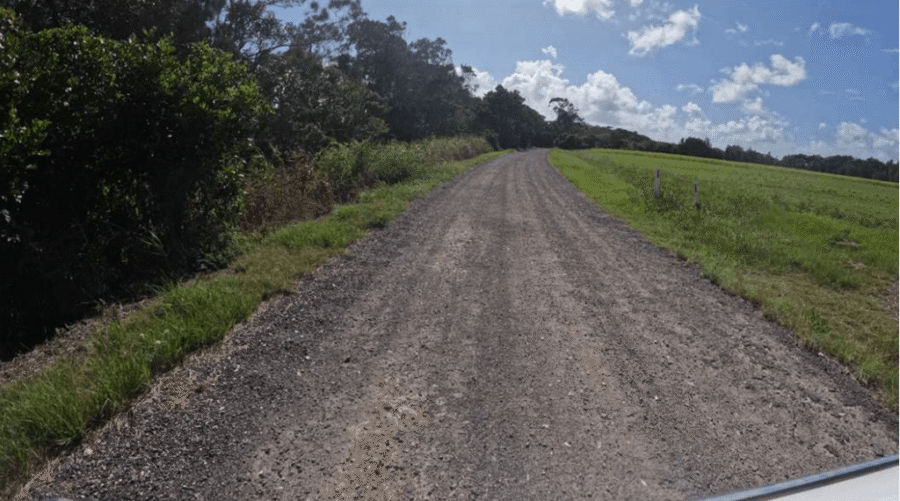
Mr Martin disputes the $1.8million the council has estimated to maintain the bitumen.
He and other residents got three quotes and the cost came to about $620,000, he said.
Mr Martin said regulations prevent a house being within 50m of a dirt or gravel road, and that some houses would be in breach. IndyNR.com asked the council’s general manager Vaughan Macdonald about this rule.
“In relation to comments regarding a ’50-metre rule’ for houses near unsealed roads, Council is not aware of any such legal requirement,” Mr Macdonald said.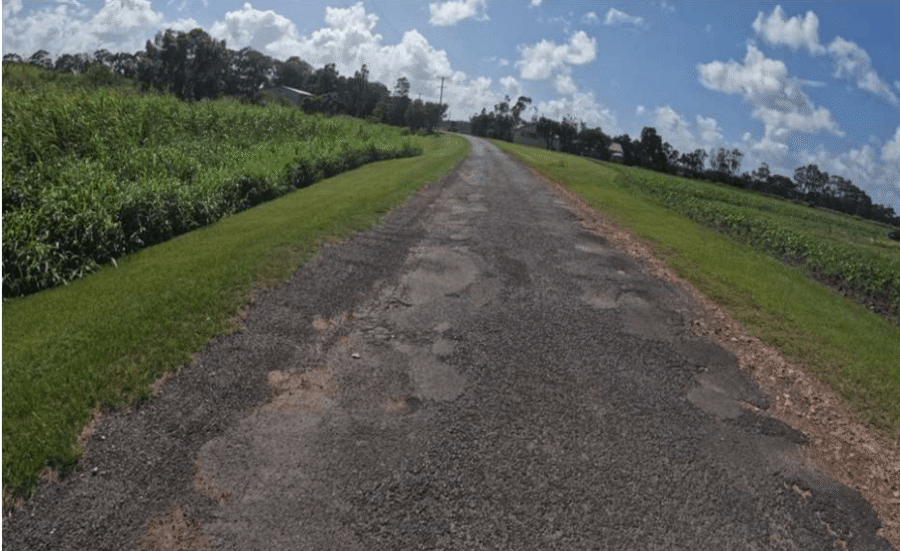
Today, Tuesday, September 1 is the final day for submissions to the Richmond Valley Council proposal. Submissions must be in by 5pm
The council has presented two options in its proposal:
Option 1: Reconstruct and reseal Boundary Creek Road
This involves fully reconstructing and resealing 1.5km of Boundary Creek Road through complete pavement rehabilitation, including subgrade improvement, drainage upgrades, and the application of a new bitumen seal.
The council estimates the cost of this work to be about $1.8million, and states that it is not included in Council’s Long Term Financial Plan or capital program.
Council said while a sealed, all-weather access road would be good for residents, it considers that the restoration of a sealed road as a high capital cost given the very low traffic volumes on Boundary Creek Road.
Traffic counts that were measured since the closure of public beach access in March 2021 show a marked reduction in daily car movements, with about 44 vehicles using the road each day.
Option 2: Formally reclassify Boundary Creek Road as unsealed road
Boundary Creek Road is designated as a Class C Road under Council’s Unsealed Rural Roads Hierarchy and would receive maintenance every two years.
The ongoing maintenance would focus on periodic grading, drainage management and surface renewal.
The council said this would enable a more consistent and ‘trafficable’ standard, as the existing degraded bitumen seal provides little structural protection and makes repairs more difficult and costly than maintaining a gravel surface.
Whilst some residents may oppose the loss of a sealed surface, the council considers there is no adverse asset impacts associated with formalising the road as unsealed.
Submissions on these options close at 5pm today.
Any person may make a written submission by:
Email: council@richmondvalley.nsw.gov.au
Hand delivery: at either of Council’s Customer Service Centres in Casino and Evans Head.
Once the submission period is completed, Richmond Valley Council will consider all duly made submissions and decide on road reclassification suitability.
More on Boundary Creek Road
Boundary Creek Road is a 1.5 km rural no-through road located north of Broadwater and forms the boundary between the Richmond Valley and Ballina Shire.
The road intersects only with Legges Lane and provides access to agricultural landholdings and eight rural residences, three of which are within the Richmond Valley Council area and five within Ballina Shire.
The road terminates in an unsealed turnaround area, provides access for authorised commercial fishing and restricted 4WD access to the beach for emergency services.
The first 900m of Boundary Creek Road, extending from Blackwall Drive (Old Pacific Highway), remains a sealed pavement in poor condition – showing signs of deterioration, including edge cracking, extensive past pothole repairs and vegetation growth encroaching within the sealed surface.